
What we help with, and how.
Most people come to us with pain, stiffness or an injury that's stopping them doing something they want to do. Below is a plain-language guide to the problems we see most often, and what treatment actually involves.

Common reasons people come to see us.
This list describes what people usually notice, not a diagnosis. If something here sounds like you, an assessment is the way to find out what's actually going on.
General information, not a diagnosis. If you have severe pain, numbness, weakness, or symptoms that worry you, please contact your GP or NHS 111 as well as, or before, booking with us.

Back & neck pain
Lower back pain, neck stiffness, sciatica and pain that travels down a leg or arm. Often builds gradually through how you sit, lift or sleep, rather than one dramatic moment.

Joint & limb pain
Shoulder pain and rotator cuff problems, frozen shoulder, tennis and golfer's elbow, hip pain, knee pain, ankle sprains and plantar fasciitis.

Sports injuries
Strains, sprains and overuse injuries from training or competing, plus the harder question of when it's actually safe to go back.
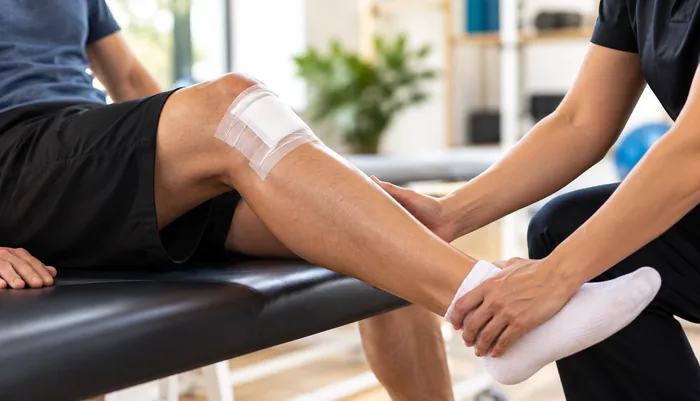
After surgery
Rebuilding movement, strength and confidence after an operation — working within whatever your surgeon has advised.

Postural & desk-related pain
Aching shoulders, tight necks and stiff backs that build up over a working day, including repetitive strain in wrists and forearms.

Long-term & arthritic pain
Osteoarthritis, joint stiffness and pain that has been around for months or years, where the goal is managing it well and staying active.
How treatment works at IntactPhysio.
We don't sell separate "treatments" — it's one pathway. We work out what is actually wrong, settle it down, rebuild it properly, and make sure it holds once you have finished with us.

Assess
We take a history, watch how you move, test strength and range, and look at how you sit and load through a working day. Then we explain what we think is going on, in plain language.

Treat
Hands-on work where it earns its place — soft tissue massage for tightness, graded joint mobilisation for a stiff joint. Used to open a window for movement, not as a treatment in its own right.

Rehabilitate
A small number of exercises that target the actual problem, chosen to fit a real week rather than an ideal one, and taught properly so you know what each one is for.

Progress
Range, balance, strength and capacity rebuilt step by step. We reassess as we go and change the plan when the evidence says so, rather than leaving it as it was on day one.

Return
Graded loading and a staged plan for getting back to your sport, your job or your usual week — with honest markers for when each step is reasonable, not just a date.

Self-manage
Practical changes to how you work, train, sit and sleep, plus a routine you can keep on your own — and a clear plan for what to do if it flares again.